Aquaponics Basics
Growing plants in water, fertilized by fish, powered by bacteria
Aquaponics has been in use for centuries
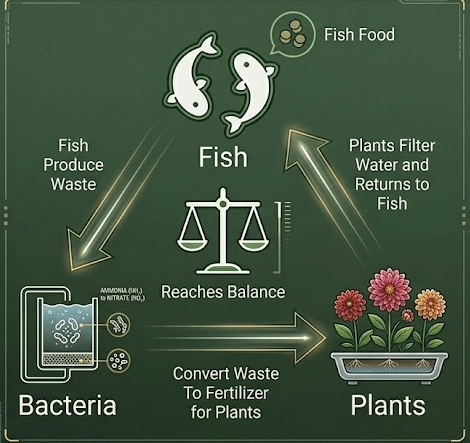
A closed loop cycle
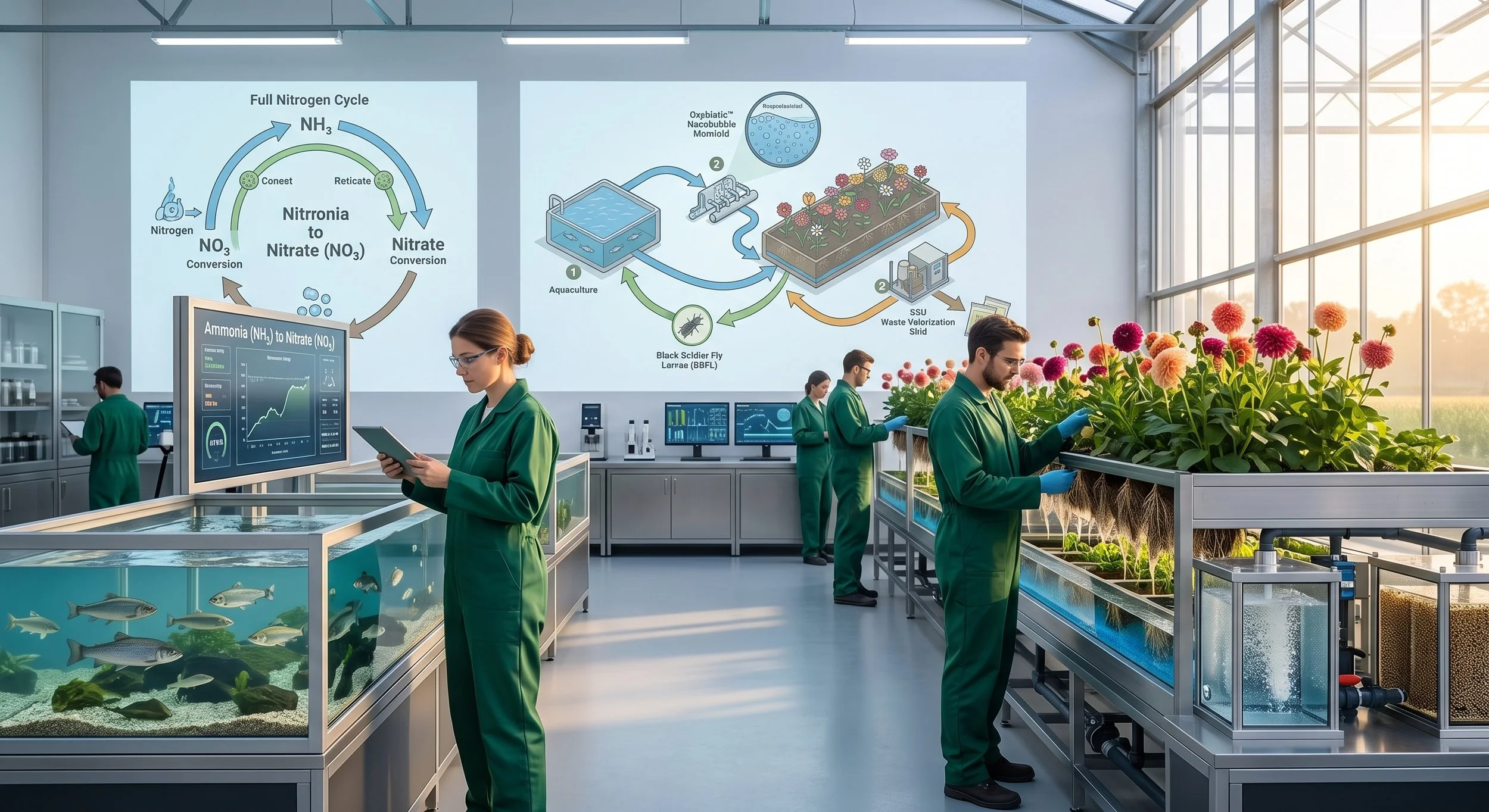
Aquaponics mimics a natural ecosystem, similar to a pond or a lake. Fish excrete waste, primarily from their gills, and that waste material needs to be metabolized (broken down) into something not toxic to the fish and other aquatic organisms. Bacteria are the foundation of nearly every harmonious habitat in the world, from the extreme environments to our very own digestive systems. A special kind of bacteria, termed “nitrifying”, come to the rescue here to convert the ammonia waste products into nitrates, which are a preferable nitrogen source for plants to absorb. The cycle balances, and all three participants thrive.